
Disclosure: This post contains affiliate links. If you purchase through these links, Midlife Truth may earn a small commission at no extra cost to you.
Last year at a youth soccer tournament, my son went in for a 50/50 ball. His foot caught a girl square on the shin who was wearing small soccer shin guards. She went down in a heap — screaming, clutching her leg — and was done for the rest of the game.
My son felt terrible. I felt terrible. But here’s the thing: she was wearing shin guards. Technically. They were these tiny little foam strips, barely bigger than a large Band-Aid. They covered maybe three inches of her shin. The rest? Completely exposed.
I have two boys who play competitive soccer. As they get older, the kicks get harder and the consequences of an unprotected shin get worse. So when I started seeing more and more kids — and pros — wearing miniature shin guards that look like they belong in a first aid kit, I had to dig in.
What I found isn’t great.
The Incredible Shrinking Shin Guard Is Now a Pro Soccer Problem
This isn’t just a youth soccer issue. It’s happening at the highest levels of the game, and the trend is trickling straight down to our kids.
ESPN just published a deep dive into the shrinking shin guard problem in professional soccer, and the timing couldn’t be better. In April 2026, former Tottenham and Germany midfielder Lewis Holtby suffered a severe gash to his left shin during an Eredivisie match in the Netherlands. The wound was deep enough to end his season — and it reignited a debate about whether today’s shin guards are actually protecting anyone.
The reaction was telling. The match referee reportedly told Holtby’s club that the player should have been wearing better shin guards. A teammate pointed to Holtby’s “small shin guards” as a contributing factor. And ESPN analyst Kenneth Perez didn’t hold back, comparing what some players wear to “toilet paper” and saying he has no sympathy for injuries that result from inadequate protection.
Liverpool’s Virgil van Dijk put it bluntly: if your shin guard is the size of an AirPod, you’ve got a big problem.
Why Are Players Going to Mini Soccer Shin Guards?
So how did we get here? A few factors are driving the trend:
- The game got less physical. Fewer hard tackles at the pro level means fewer direct impacts to the shin. Players feel safer without heavy protection — until they aren’t.
- Speed is everything now. Modern attackers want to feel as light and unrestricted as possible. Even a few extra ounces on their shins feels like a handicap. Some players genuinely believe smaller guards make them faster.
- Training vs. game disconnect. Players train without shin guards all week, then strap on a full-size guard for match day. It feels foreign. So they gravitate toward something that feels closer to nothing.
- Fashion and aesthetics. Low socks, minimal bulk, clean look. It’s a style thing. And when Premier League stars do it, kids copy it — fast.
- The rules changed. In July 2024, IFAB shifted responsibility for shin guard adequacy from referees to players. The rule now says shin guards must provide “a reasonable degree of protection” but sets no minimum size.
IFAB technical director David Elleray told ESPN they hoped players would “take a responsible attitude” after the rule change. They haven’t. Some pros are literally cutting up physio sponges and stuffing them in their socks.
Here’s Why This Matters for Your Kid
Let’s be real about what’s happening on the ground at youth soccer.
Kids — especially teenagers — copy what the pros do. When they see Bukayo Saka or Jack Grealish rolling their socks down with tiny shin guards underneath, that becomes what’s cool. Full-size shin guards become the soccer equivalent of wearing a helmet on a skateboard: technically smart, socially uncool.
But here’s what the pros have that your 12-year-old doesn’t:
- Body control. Professional players have spent thousands of hours refining their movement. They know how to absorb contact and protect themselves instinctively. Your kid is still learning.
- Medical staff on the sideline. Premier League players have world-class physios, doctors, and trainers within arm’s reach. Your kid has a parent with a bag of ice and a prayer.
- A calculated risk-reward. A pro making millions can decide to trade safety for a marginal speed advantage. That’s their call. A 13-year-old playing U14 club ball in Houston has no business making that trade.
Youth soccer is also less controlled than people think. Kids are still developing coordination. Tackles are mistimed. Feet go where they shouldn’t. The shin — the tibia — is one of the most exposed bones in the body, sitting right beneath the skin with almost no muscle or fat to cushion a blow. A hard kick to an unprotected shin can cause deep bone bruises, lacerations, or fractures that take months to heal.
What the Data Actually Says About Shin Injuries in Youth Soccer
Research published in the Orthopaedic Journal of Sports Medicine found that over 500,000 lower extremity soccer injuries in players under 18 were treated in U.S. emergency departments between 2013 and 2022. Fractures accounted for a significant portion of those injuries, and the shin was consistently one of the most commonly injured areas.
A separate study reviewed 31 cases of lower-leg fractures in soccer and found something alarming: the majority of those fractures happened while the player was wearing shin guards, and in over half the cases, the impact hit the shin guard directly. The conclusion? Many shin guards on the market simply aren’t strong enough to prevent fractures from a hard impact.
Now imagine your kid is wearing one of those foam mini-guards that covers a third of their shin. The math doesn’t work.
Researchers have found that standard shin guards reduce impact force by 11-17% and strain by 45-51% compared to an unprotected leg. That’s a meaningful difference — but only if the guard actually covers the area that gets hit.
What You Should Actually Look For in Youth Shin Guards
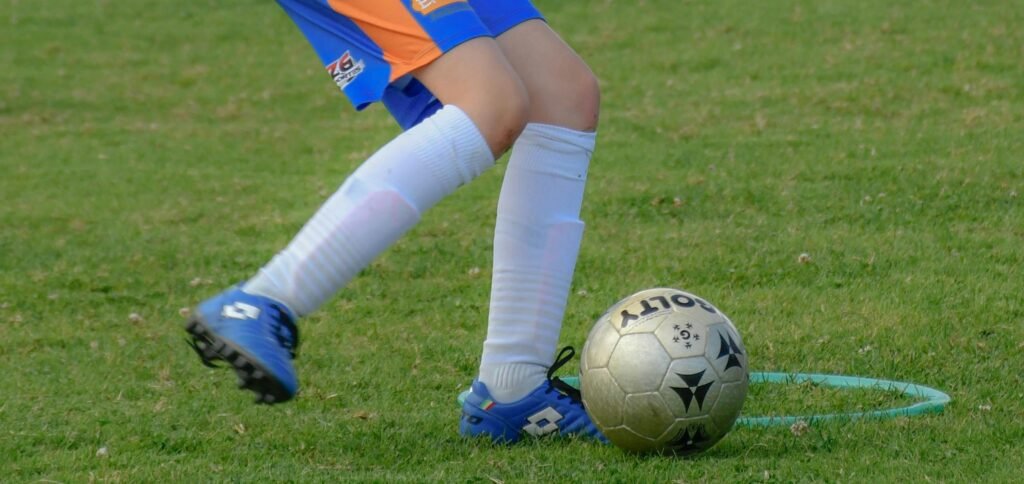
Here’s how to buy shin guards that actually protect your kid without making them miserable on the field:
- Look for the NOCSAE stamp. This should be your baseline for any youth player. If the guard doesn’t have it, skip it.
- Cover the shin properly. A well-fitted guard should extend from about two inches below the knee to just above the ankle.
- Hard shell matters. Foam-only guards don’t cut it for competitive play.
- Size by shin length, not age. Measure the shin and use the brand’s size chart.
- Consider ankle guards for younger players. Players under 12 may benefit from the added protection.
- Replace them regularly. Growing kids need new guards every 6-12 months.
Good Shin Guards That Actually Protect (Without Feeling Like Leg Casts)
The “big shin guards are uncomfortable” argument has some validity — but it’s outdated. Modern guards are dramatically lighter and better contoured than what we wore as kids. Here are solid options worth considering:
Nike Mercurial Lite
Hard shell, lightweight, and a good balance between comfort and real protection. Great for competitive youth players who want something low-profile but not useless.
Under Armour Challenge Youth
Hard shell, NOCSAE certified, and usually budget-friendly. A strong value pick for club players whose parents don’t want to spend premium money.
Check price on Amazonhttps://amzn.to/4e2GDmI
G-Form Pro-S Vento
Flexible smart material that hardens on impact. Good for kids who resist bulky gear but still need real protection.
Nike Charge
Budget-friendly and reliable. Hard shell with foam backing. No drama, no frills, and less likely to start an argument in the car.
Have the Conversation With Your Kid
If your kid is 10 or older and plays competitive soccer, they’ve probably already seen teammates with the tiny guards. They might have already asked for a pair. Here’s how I’ve handled it with my boys:
- Show them the Holtby video. A professional player with a deep, bloody gash on his shin because his guards were too small. Season over.
- Explain the risk in terms they understand. “If you break your shin, you’re out for three to six months. Is a slightly lighter shin guard worth that?”
- Let them pick the brand and style. But the guard has to cover the shin properly and have a hard shell. Non-negotiable.
- Talk to the coach. Good coaches care about this stuff.
The Bottom Line
Professional soccer has a shin guard problem, and it’s filtering down to youth soccer in a hurry. No one is policing this for you.
Mini shin guards that look like AirPod cases are a fashion choice, not a safety decision. They might be fine for a professional winger who gets tackled twice a game in a stadium with a full medical team. They are not fine for a 12-year-old playing fall club ball on a bumpy field with a parent volunteer coaching third base — I mean, the sideline.
Get your kid proper shin guards. Make sure they fit. Replace them when they’re outgrown.
And if your child pushes back because some Premier League star wears tiny ones, remind them: that guy also makes $200,000 a week and has a surgeon on speed dial. Your kid has you, a bag of frozen peas, and an urgent care copay.
Protect the shins. It’s not complicated.
Got a question about youth soccer gear? Drop a comment below or check out our other guides on Midlife Truth.
Disclaimer: This post is for informational purposes only. Nothing here constitutes legal advice, medical advice, or financial advice. Do your own research and consult a qualified professional before making decisions about your child’s health or safety.