Disclosure: This post may contain affiliate links. If you purchase through one of these links, Midlife Truth may earn a commission at no additional cost to you. The information in this article is for general informational purposes only and is not financial, legal, medical, or other professional advice.
Before I reach the grocery store door, I pass a doorbell camera, a license plate reader, a traffic camera and a dozen phones. Nobody writes headlines about any of them.
Then, someone puts a camera in a pair of Meta Ray-Bans. Suddenly, we have a privacy crisis.
Meta Ray-Ban Camera: The Quick Answer
The camera in Meta Ray-Ban glasses is not the privacy revolution people think it is. What happens to the images after capture is the real concern.
Two parts of the camera backlash deserve the heat. Those are facial recognition and human review of footage from the camera. The rest is mostly noise about being seen in public.
Where I Draw the Line First
This is not a defense of filming people in bathrooms, locker rooms, dressing rooms or bedrooms. It is not a defense of upskirt shots or covert harassment either.
Those acts can be crimes no matter what device records them. My argument covers ordinary recording in public places.
Why I Want the Camera
The camera is the reason I want smart glasses at all. I want to capture real life activities and events without holding a phone between me and the moment.
According to The Information, Meta may unveil camera-free glasses code-named Luna at Connect on September 23. The reports describe Luna as an addition to the lineup rather than a replacement.
I will skip Luna. Without a camera, Meta AI cannot see what I see.
You Are Already on Camera
Doorbell cameras record everyone who walks past a house. License plate readers such as Flock log vehicles on public roads. Traffic cameras watch intersections.
Phones come out at every concert, checkout line and youth game. Nobody asks permission before filming a crowd.
Our own devices watch us too. Many smart TVs use automatic content recognition to log what we watch. In 2024 the Texas attorney general sued General Motors over selling driving data.
Is There Really No Privacy in Public?
In the United States, people generally have a limited expectation of privacy in public places. Video of someone walking down a public sidewalk is usually legal.
Audio is different. Texas generally allows recording a conversation when one party consents. Illinois generally requires every party’s consent to record a private conversation.
Recording law varies by state. Whether a conversation counts as private can change the answer.
What Glasses With a Camera Actually Change
A fair critic would point to three differences between glasses and a doorbell camera.
The Camera Moves With You
A porch camera stares at a driveway. Glasses point wherever the wearer looks, including from three feet away at a bar or gym.
The Camera Signal Is Easy to Miss
People notice a phone held up in front of them. They may not notice a pair of sunglasses.
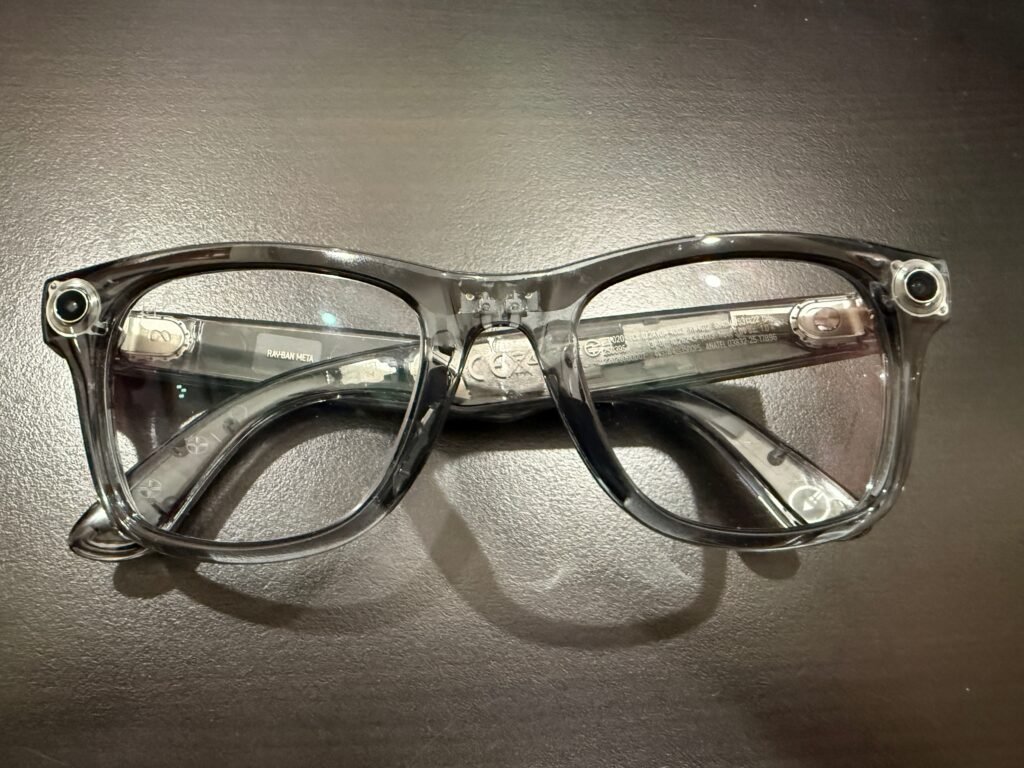
Meta’s glasses have a white capture LED that blinks while recording. Meta says the light has no off switch and that blocking it disables the camera. Phones have no comparable recording light at all.
The light has not been foolproof. Some owners physically removed it to film people covertly. Meta now disables the camera when it detects tampering.
The light also stays off in one situation. On newer models, it does not turn on when the camera captures an image for an AI question, according to Ray-Ban’s FAQ.
The Footage Can Leave the Device
Meta says photos and videos stay private on the glasses unless you choose to share them. Footage shared with Meta AI is a different story.
Asking Meta AI about what you see sends a photo to Meta’s cloud for processing. Ray-Ban’s FAQ says those photos are stored and used to train Meta’s AI with help from trained reviewers.
The Two Problems That Deserve the Heat
Human Review of Intimate Footage
In February, workers at Sama, a Kenyan contractor, told Swedish newspapers they had reviewed footage from Meta’s glasses. They described seeing people undressing, using the toilet and having sex.
Meta ended its contract with Sama in April. The company said the firm did not meet its standards, which Sama disputes.
A stranger catching me on video at Costco is one thing. Someone’s bedroom on a paid reviewer’s screen is a different problem entirely.
Facial Recognition
In June, Wired found dormant face-recognition code, internally called NameTag, in the Meta AI companion app. The app sat on more than 50 million phones. It was never turned on.
Meta removed the code the day after the report. The company said no final decision had been made about the feature.
A proposed class action filed in September alleges Meta used Facebook and Instagram photos to build it. Meta denies the allegations. In 2024 Meta paid Texas $1.4 billion to settle an earlier facial recognition lawsuit.
Facial recognition turns “I can see you” into “I know who you are.” That capability goes far beyond a camera.
Recording Is Not the Same as Processing
Suppose the glasses could glance at a hawk, name it and then immediately discard the image. I would have no complaint about that.
Saving the image, uploading it or showing it to a contractor raises different questions. Those questions come after the camera sees us.
Is the image saved or uploaded? Could it identify us? Can another person see it?
Pros and Cons
Pros
- Hands-free photos and video let you capture a moment without pulling out a phone.
- Meta AI can see what you see and answer questions about it.
- A capture LED signals photos and video to bystanders, which phones do not.
Cons
- The glasses look like ordinary sunglasses, so bystanders may not realize they are being filmed.
- Footage you share with Meta AI may be reviewed by humans.
- The LED stays off when newer models use the camera for AI questions.
- Some venues now ask wearers to take them off.
Who Should Buy and Who Should Skip
Buy them if you want a camera you control. Treat the LED and the AI sharing settings as part of the deal.
Skip them if you do not want any first-person footage leaving the device. The camera-free Luna may suit you better.
When to Buy
If you plan to buy, wait a couple of weeks. Two events could bring the price down.
Meta Connect runs September 23 and 24. If Meta announces a Gen 3 model, retailers may discount Gen 2 to clear inventory.
Amazon’s Prime Big Deal Days runs October 6 and 7 for Prime members. Neither event guarantees a discount on these glasses.
The Bottom Line
We have spent years normalizing cameras everywhere. Moving one of them onto a pair of glasses changes less than the headlines suggest.
Faceprints and human reviewers deserve real scrutiny. A pair of Ray-Bans taking my picture on a public street does not.