
This post contains affiliate links. If you buy through them, I may earn a small commission at no extra cost to you.
Before this summer, I thought bidets were weird. Honestly, they were a little gross.
Water shooting at my backside? No, thank you. I had no intention of ever using one.
Then we went to Japan.
The Short Answer
One jet-lagged evening in a Tokyo hotel bathroom converted me. We stayed in three different hotels over two weeks, used a different bidet in each one, and by the end of the trip I wasn’t wondering whether to buy one for our house — just which one. If you’re on the fence, here it is: yes, they’re worth it, no, it’s not gross, and you can try one for about the cost of a dinner out. The options are at the bottom.
Night One in Tokyo
We landed in Tokyo on a Friday afternoon in early July after a direct flight from Houston. That evening, running on fumes and jet lag, I had my first encounter with a Japanese toilet.
Here’s the thing about Japanese hotel toilets: they don’t give you much choice. The control panel is right there on the side, the seat is already warm when you sit down, and at some point curiosity wins. Mine won on night one.
Was it weird the first time? Absolutely. There is no way to describe warm water hitting a place warm water has never deliberately hit without using the word “weird.” But weird lasted about ten seconds. What came after was the surprising part: I felt genuinely cleaner than I ever have with toilet paper. Not marginally cleaner. Obviously cleaner.
The Features That Actually Won Me Over
The heated seat. You don’t know you want this until you have it. Sitting down on a warm seat instead of a cold one is a small luxury that stops feeling optional very fast.
The night light. The toilet had a soft light glowing in the bowl. If you’re a man of a certain age — and if you’re reading this blog, odds are decent — you know the middle-of-the-night bathroom trip is a regular event. Not having to blind yourself with the overhead light at 3 a.m. is genius.
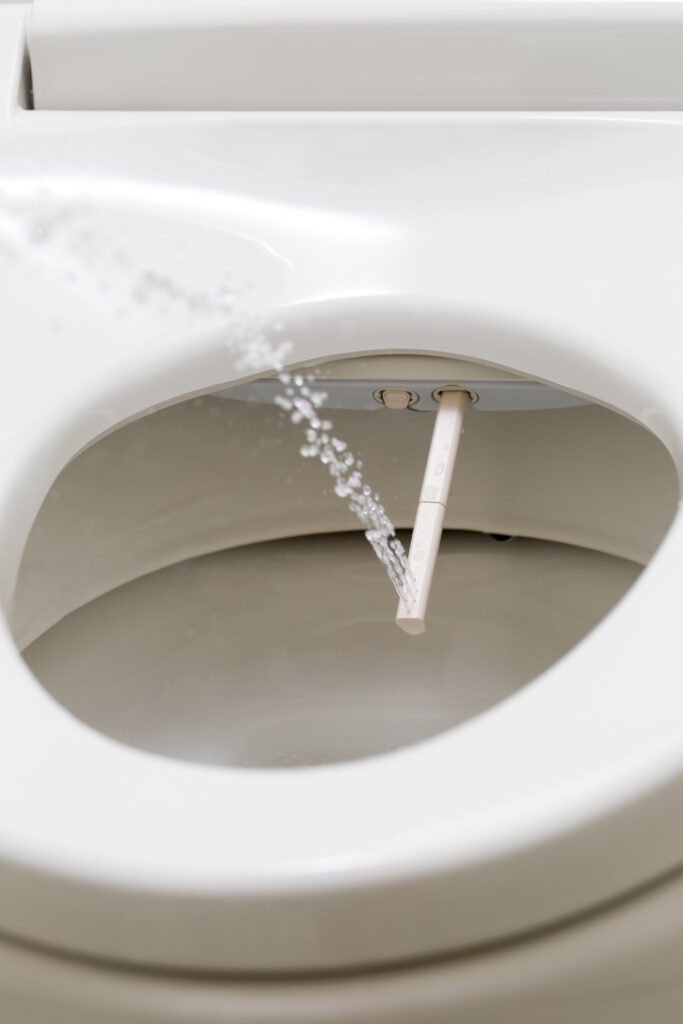
Adjustable everything. You control the water pressure. You control the position. There’s an oscillation mode that moves the stream around instead of holding one spot. The first hotel’s model even had a warm-air dryer, which I also tried, because at that point why not.
A separate front-wash setting. These all have a second mode designed for feminine hygiene, so it’s not a guys-only appliance. Whoever you share a bathroom with gets a vote here, and this feature usually wins it.
Self-cleaning nozzles. The wand rinses itself before and after use, which answers the first question every skeptic asks. No, you’re not sharing a nozzle situation with the last person. It cleans itself.
The Honest Part
Three hotels, three different bidets. Two of them were fantastic. One was just decent — good enough that I only found out it was “decent” because I did a courtesy wipe to check its work.
Even that one left me cleaner than toilet paper alone ever has. I did run a QC after each time. I can say that it left me cleaner than any normal TP experience other than those perfect poops, which left nothing to wipe.
That’s the honest scorecard: two A’s, one B, zero regrets.
My wife, for the record, spent the whole trip reminding me that in much of the world, washing instead of wiping is just… normal. It’s America that’s the outlier. And when I posted about my conversion on Facebook, a friend summed it up better than I ever could: you wash your hands with soap and water — why would washing the part of your body where the actual mess happens be the weird option?
I don’t have a comeback for that. There isn’t one.
A Quick Word on Wet Wipes
I know some people split the difference with flushable wipes. Two problems. First, “flushable” is a generous marketing term — those wipes are a leading cause of clogged pipes and expensive plumber visits. Second, you’re still wiping, just with a damp version. A bidet washes. It’s not the same thing.
You’ll also see claims floating around that bidets reduce the risk of various medical conditions. I looked into some of those claims and couldn’t verify them, so I’m not going to repeat them as fact. What I can tell you from two weeks of direct experience: you feel cleaner. That’s enough for me. (If you have a medical condition that affects any of this, that’s a conversation for your doctor, not a blog.)
Bringing It Home: What It Takes
Here’s what I learned when I started pricing out the retrofit for our house.
The full Japanese-hotel experience — heated seat, warm water, dryer, night light — comes from an electric bidet seat that replaces your existing toilet seat. The catch: it needs an outlet near the toilet. If you have one, installation is a DIY job. If you don’t (most American bathrooms don’t), you’re calling an electrician to add a GFCI outlet, which adds a few hundred dollars to the project. The remotes are battery-powered, which is why the control bars in our hotels looked cordless — but the seat itself needs real power.
Before ordering: Be sure to verify whether your toilet has a round or elongated bowl. Bidet seats are made in different shapes, and ordering the correct version will ensure a proper fit and save you the hassle of making a return.
If you’re not ready for that, there’s a much cheaper on-ramp: a non-electric attachment that slips under your existing seat and connects to the toilet’s water line. No electricity, no electrician, 30-minute install with basic tools. The tradeoff is unheated water and no heated seat. In a Houston summer, cold water is arguably a feature. In January, less so.
The Options, By Budget
Just want to try it (~$50): The Luxe Bidet Neo 185 is the classic starter attachment — adjustable pressure, self-cleaning nozzle, dual wash modes, no electricity needed. This is the “prove it to yourself” purchase. Check price on Amazon
The step up (~$100): The Tushy Classic 3.0 does the same job with better build quality and finer control over pressure and nozzle angle. Still non-electric, still DIY. Check price on Amazon
The real Japanese experience (~$450): The TOTO Washlet A2 is made by the same Japanese company behind most of the toilets we used on our trip. Heated seat, warm water, warm-air dryer. This is the entry point to what I experienced in those hotels. Check price on Amazon
Buy once, cry once: The TOTO Washlet C5 adds a self-cleaning wand system and a pre-mist function that keeps the bowl cleaner. This is the closest thing to teleporting a Tokyo hotel bathroom into your house. It’s the one I’m leaning toward. Check the current price on Amazon
Pros and Cons
Pros:
- You are measurably, noticeably cleaner
- Heated seat and night light make it a genuine quality-of-life upgrade
- Cuts your toilet paper use dramatically
- Options at every price point, from $50 to Tokyo-hotel luxury
- Front-wash mode means everyone in the house benefits
Cons:
- The first use is undeniably weird (ten seconds, then you’re over it)
- Electric seats need an outlet near the toilet — possible electrician visit
- Cheap attachments are cold-water only
- Not every model cleans equally well — one of our three hotels proved that
Who Should Buy One
Anyone who’s ever wondered if there’s a better way. Anyone making the 3 a.m. bathroom trip. Anyone whose spouse has been hinting. And especially anyone who’s been to Japan and has been quietly missing those toilets ever since — I know you’re out there.
Who Should Skip It
If you rent and can’t modify the bathroom, check with your landlord first — though the non-electric attachments install and remove without a trace, so even that’s a soft no. Honestly, the only person who should skip this is someone who’s tried one and didn’t like it. I just haven’t met that person yet.
The Bottom Line
I went to Japan thinking bidets were gross. I came home shopping for one. It took exactly one jet-lagged evening in Tokyo to undo forty-plus years of American toilet paper loyalty.
To bidet or not to bidet? After Japan, it’s not even a question.
Start with the $50 attachment if you’re skeptical. Go straight to the TOTO Washlet if you’re ready to believe. Either way, you’ll wonder why you waited.
Looking for more real-world insights? Explore more travel stories, technology reviews, investing ideas, and practical advice at Midlife Truth.
This post reflects my personal experience and isn’t medical advice. Product prices are approximate as of July 2026 — check current pricing on Amazon.