I’ve noticed something in how people find this blog: a lot of you are searching some version of “is Pinter legit?” or “what is a Pinter?” before you’re willing to hand over a credit card number.
I get it. A company offers you a free beer-brewing machine if you just buy the beer, the ads are everywhere, and your scam radar starts pinging. Mine did too.
So let me answer the question directly, because I’m in a position to: I own two Pinters, I’ve brewed two batches, and as I write this, my third is getting started on the counter. Nobody is paying me to say any of this — I’m not a sponsor, I have no affiliate relationship with Pinter, and I bought my machines with my own money during a Black Friday deal.
Is Pinter Legit? Here’s the Short Answer
Pinter is a real product from a real company that does what it advertises: it brews genuinely good beer on your kitchen counter with very little effort. The machine works, the beer arrives, the beer tastes good, and the “free Pinter” promotions are a legitimate business model, not a bait-and-switch. It’s not perfect — I’ll get to the honest downsides — but it is absolutely not a scam.
What Is a Pinter, Exactly?
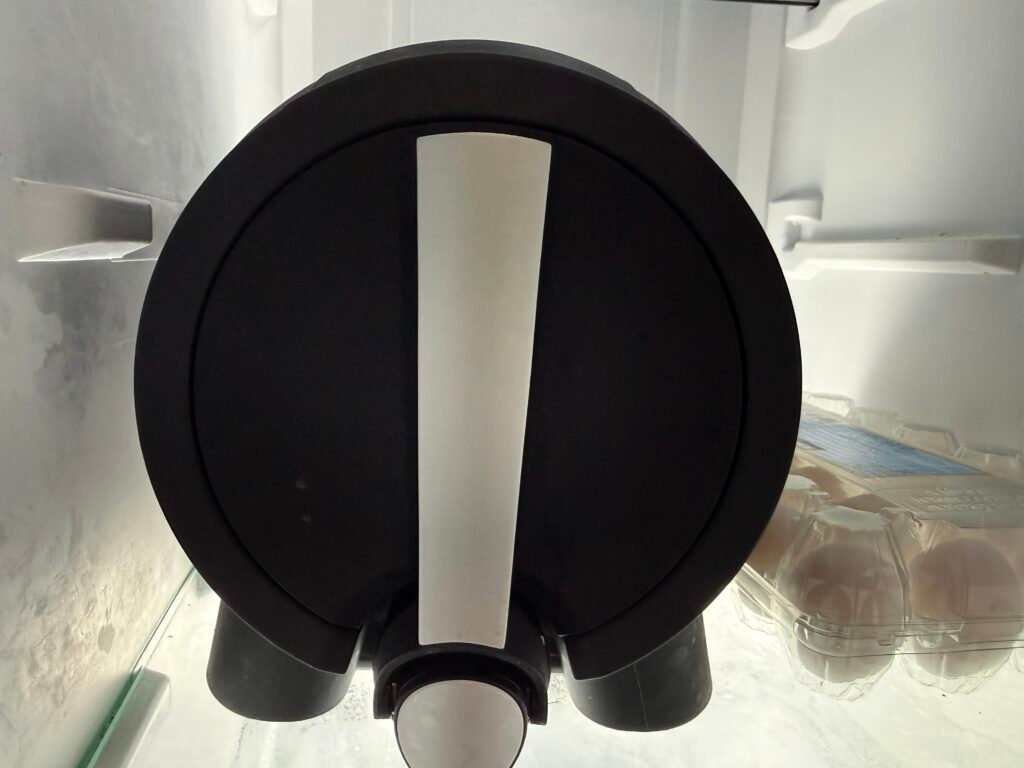
A Pinter is an all-in-one home beer brewing system from a UK company (originally The Greater Good Fresh Brewing Co., now just Pinter). Picture a keg-shaped container with a built-in tap. You sanitize it, add water and their pre-measured beer concentrate, add the yeast, shake it hard for a minute, and let it sit on your counter for several days while it ferments. Then it goes in the fridge to condition, and after that you’re pouring draft beer from a tap in your refrigerator. Each batch makes about a dozen pints.
The whole active-work portion takes maybe 15 minutes. The rest is waiting. That’s the entire pitch: real brewing, none of the buckets, siphons, bottling, or brewing-supply-store pilgrimages of traditional homebrew.
My Experience: Two Brews and One Self-Inflicted Disaster
My first batch was Razz Session, a raspberry sour. Four days brewing, three days in the fridge, and it came out light, fruity, and genuinely good — I had friends try it, including people who don’t usually drink fruit-forward beers, and it got thumbs-up across the board. I wrote up the full experience in my first Pinter review.
My second batch, Winter’s Slumber, is where I owe the record some honesty: while repositioning the unit for a photo, I twisted it clean off its brewing dock mid-ferment and sent beer across my counter and floor. And the verdict on the surviving beer? It tasted fine — maybe a touch less strong than anticipated, but when friends came over, not one of them could tell anything had gone wrong with it. A machine that produces drinkable beer even after its owner partially disassembles it mid-brew is, if anything, a point in favor of legitimacy. Still: that spill was 100% my fault, not the machine’s. Don’t rotate a Pinter that’s sitting on its dock. The instructions never told me not to, presumably because nobody at Pinter imagined a grown man would try to art-direct a photoshoot mid-fermentation.
Batch three went on the counter this week. I’ll update this post when it’s ready.
Don’t Take My Word for It: What the Broader Record Says
Since the question is legitimacy, my two batches shouldn’t be your only evidence. Here’s what’s out there:
Thousands of public reviews. Pinter’s Trustpilot page has roughly 5,900 reviews with a strongly positive overall score. The consistent themes match my experience: easier than expected, beer better than expected. The negative reviews are real too, and worth reading — more on those below.
Mainstream press has reviewed it. CNN Underscored tested one across several batches and came away positive, describing it as self-contained and legitimately fun to use. Reviewers there had the same “too good to be true?” suspicion going in that you probably have now.
Veteran homebrewers rate the output. One reviewer with 30 years of traditional homebrewing experience found the Pinter’s results comparable to professional-quality beer — largely because the sealed, simplified process leaves less room for the oxygen exposure and contamination that plague bucket brewing.
Industry recognition. Pinter was named World Microbrewery of the Year at the 2025 World Beer Awards. Scam operations don’t tend to accumulate industry hardware.
About That “Free Pinter” Deal
This is the part that makes people suspicious, so let’s demystify it. The deal I took: buy beer packs and commit to a subscription shipment, get the Pinter hardware free. That’s not a trick — it’s the razor-and-blades model, the same economics as inkjet printers and coffee pod machines. Pinter gives away the hardware because the ongoing business is beer packs, which run roughly $26 to $39 for a dozen pints depending on style. They’re betting you’ll like it and keep ordering. In my case, the bet paid off for them: I liked it enough to grab a second machine.
Two things to know before you take the deal: the subscription is a real commitment, so read what you’re agreeing to ship and when, and know that you can manage or pause it from your account. Standard subscription hygiene applies — legit and “read the terms” are not opposites.
The Downsides
A legitimacy verdict without the negatives would just be an ad, so here’s the other side of the ledger, from both the review record and my own kitchen:
Some units have problems. A slice of Trustpilot’s negative reviews describe leaking units or brews that went bad. It happens. Related complaint: when it does, support asks for photos and videos to diagnose, and some customers describe going in circles before resolution. My units have been fine, but the pattern shows up often enough to mention.
The tap drips — both of mine do. CNN’s reviewer noted a small trail of beer from the nozzle after pouring, and I can confirm it’s not a one-off: both of my Pinters do it. Plan for it. You need something under that tap to catch the runoff — a folded paper towel, a small dish, a bar mat, whatever — or you’ll be wiping beer off your fridge shelf every time you pour. It’s not a deal breaker, but it’s real, and nobody tells you before you buy.
It occupies serious fridge space — for weeks, not days. Let me be direct about this one, because I think the other reviews undersell it. A Pinter is roughly the volume of a large turkey, and the math is worse than “a week per batch.” The brew conditions in the fridge for days, and then the beer keeps for close to 30 days — which means unless you have a steady stream of thirsty friends coming over, twelve pints doesn’t disappear in a weekend. Realistically, that Pinter is parked in your fridge for three to four weeks per batch. The only reason this works in our house is that we have a second refrigerator. If you’re a family running on one fridge, be honest with yourself: this thing will eat a solid quarter of a rack for a month at a time, competing with the milk, the leftovers, and everything from your last grocery run. Measure your shelf — and check with whoever else stocks that fridge — before you order. With two machines, our second fridge is basically running a small amateur brewery.
It’s not instant. Brew plus conditioning runs a week or more depending on the style. If you want beer tonight, the store remains undefeated. This is a hobby with a delicious payoff, not an appliance.
Who Should Buy One (and Who Shouldn’t)
Get one if you like the idea of draft beer at home, you enjoy a low-effort hobby with a payoff you can drink, or you’ve been curious about homebrewing but scared off by the buckets-and-siphons version. It also makes a genuinely good gift for the beer person in your life.
Skip it if your fridge is already at capacity, you have no patience for a week-long wait, or you drink beer twice a year — twelve pints of anything is a commitment.
The Bottom Line
Is Pinter legit? Yes — two brews, one self-inflicted beer flood, and a fridge full of evidence say so, and the public record backs it up. It’s a real machine from a real company that makes real (and really good) beer, sold on a giveaway-the-hardware model that’s unusual enough to trip people’s scam alarms but boring enough to be an economics-textbook example.
Batch three is fermenting as I type. I’ll report back.
My Pinter Rating
Overall rating: 9/10
I have no sponsorship or affiliate relationship with Pinter. I bought my machines and beer packs with my own money, and nobody reviewed this post before publication. For the blow-by-blow of my first batch, including the photo-shoot incident, the original review is here.