This post contains affiliate links. If you buy through them, I may earn a small commission at no extra cost to you. And to be clear up front: nothing here is financial advice — I’m just telling you what a dollar bought my family in Japan this summer.
The Japanese yen is trading at about 162 to the US dollar as I write this — a 40-year low. Let me translate what that abstraction means in real life: my family of four just spent two weeks in Japan, and other than one category I’ll get to, our money went further than it has on any trip we’ve ever taken.
If Japan has been sitting on your someday list, I want to walk you through what that exchange rate actually buys — including the story of how I came home with a camera you literally cannot purchase in the United States.
The Short Answer
At roughly ¥162 to the dollar, that elegant ¥10,000 note — the biggest bill in Japan — costs you about $62. Combine that with Japan’s tax-free shopping system for tourists (roughly 10% off many purchases just for showing your passport) and the $800-per-person US customs exemption that pools across your family, and Japan right now is one of the best places on earth to be holding American dollars. Electronics, clothing, kitchen knives, quality goods of almost every kind: noticeably cheaper than home. The one exception, at least in our experience: restaurant meals, which I’ll be honest about below.
Why the Yen Is This Weak (the 30-Second Version)
I won’t pretend to give you a currency lecture — and this is where I remind you again that I’m not your financial advisor. The short of it: the yen has been sliding for years, and in 2026 it hit levels not seen in four decades, despite Japan raising interest rates and spending tens of billions trying to prop it up. Whether that continues is anyone’s guess and not my department. What I can tell you is what it looked like from street level in July: American purchasing power that felt almost unfair.
Tax-Free Shopping: The Other 10%
The exchange rate is only half the discount. Japan waives its 10% consumption tax for foreign tourists on qualifying purchases (generally ¥5,000 and up at participating stores). The mechanics are simple: bring your passport — your physical passport, not a photo of it — to the register, and the store handles the paperwork.
One important heads-up if you’re planning a trip: Japan is overhauling this system on November 1, 2026. After that date, you’ll pay the tax at the register and claim a refund at the airport when you leave, instead of getting the discount in-store. Same savings, more procedure. If you travel before November, enjoy the simpler version we got.
The Camera You Can’t Buy in America
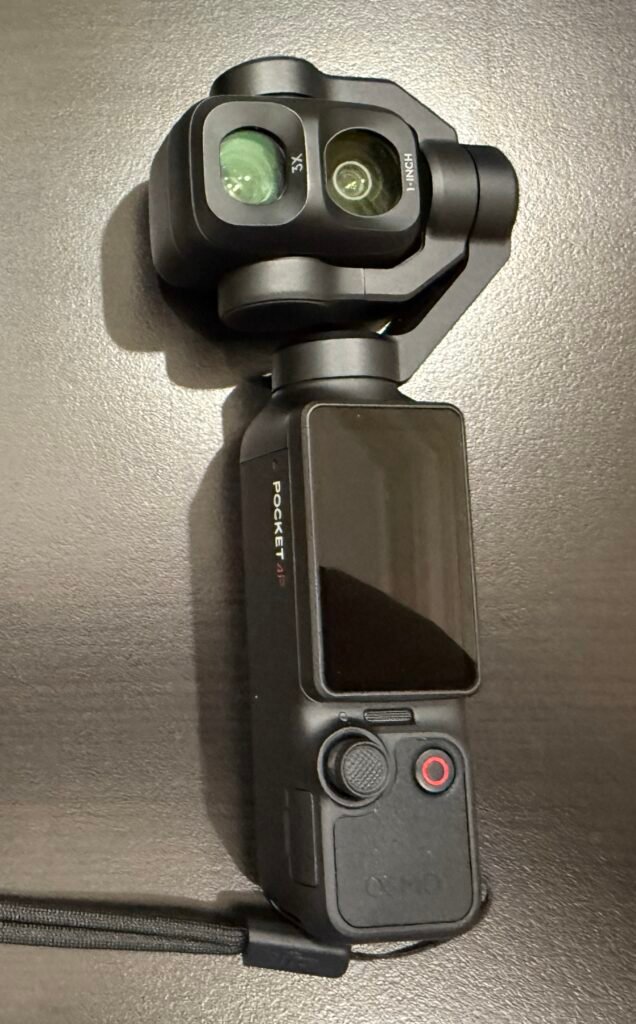
Now for my favorite purchase of the trip. DJI — the drone and camera company — released a pocket gimbal camera called the Osmo Pocket 4P in Japan at the end of June, days before we landed. Here’s the thing: DJI’s newest products aren’t sold in the United States right now due to regulatory issues, and the Pocket 4P has no official US release at all. This camera does not exist on American shelves at any price.
It barely existed on Japanese shelves either — it had been out for less than a week, and I hunted through five or six electronics stores before I finally found one in stock. The sticker price was ¥100,000, but with the tourist tax exemption I paid ¥90,000 — about $555 at the exchange rate when I bought it. For a just-released camera that grey-market importers would eventually sell to Americans at a steep markup. Conservatively, buying it in Japan saved me a couple hundred dollars over any path to getting one here, and that assumes you could get one at all.
And yes, before anyone asks: we declared everything when we came home. Which brings me to the rule every American traveler should know.
The $800 Rule (It Pools for Families)
US Customs gives each returning traveler an $800 personal exemption — bring home up to $800 in goods duty-free, as long as you’ve been abroad at least 48 hours (and haven’t used the exemption in the past 30 days). Here’s the part many families don’t know: members of a household traveling together can pool their exemptions. For our family of four, that’s a combined $3,200 — and it doesn’t matter who technically owns which item. My camera counted against our family total, not just my personal $800.
Go over the pooled limit and it’s not a catastrophe: the next $1,000 in goods is charged a flat 3% duty. The actual rule is simpler and cheaper than most people fear — which is exactly why you should declare everything honestly. We did, the process took minutes, and nobody paid a penny beyond what the rules required. The details are on CBP’s official page, which is worth five minutes before any international trip.
What Else the Dollar Crushed
The camera was the trophy, but the pattern held everywhere. Clothing — including brands and styles that are pricier or harder to find at home — cost meaningfully less. We brought back kitchen knives (Japan’s knife-making reputation is fully earned, and that’s a future post of its own). Quality goods across the board — the kind of well-made items Japan specializes in — consistently rang up at prices that made us double-check the conversion math.
A good rule of thumb while you shop: knock a third off the yen price’s face value and you’re close. ¥3,000 is about $18.50. ¥15,000 is about $92. After a day or two, you stop converting and start grinning.
The Surprising Exception: Food
Now the part the yen headlines won’t tell you. We expected food to be comically cheap, and sometimes it was — convenience store meals, casual noodle shops, and vending machine everything remain a bargain. But sit-down restaurant meals, especially in Kyoto, regularly cost what we’d pay at home in the US. Sometimes the explanation was on the plate: when you’re eating high-quality wagyu beef, you’re paying wagyu prices in any currency, and it was worth it. But even setting the wagyu aside, our nicer meals ran American prices often enough that it became a running observation of the trip.
So budget your food like you’re eating out in a major American city, and let everything else be the pleasant surprise.
If You Can’t Get the Camera I Got
Since I know some of you will now want a pocket camera and can’t fly to Tokyo for one, here’s the honest lay of the land on what you can buy on Amazon in the US:
DJI Osmo Pocket 3 Vlog Combo: The previous generation of what I bought, still available in the US, and still the category benchmark — 1-inch sensor, silky 3-axis gimbal stabilization, 4K/120fps, the camera that made this whole category famous. This combo bundles DJI’s Mic Mini wireless microphone, which solves the audio question in the same box. Check price on Amazon
Xtra Muse (~$449): The challenger brand built specifically to fill DJI’s US-shaped hole — same 1-inch sensor class, 4K/120fps, 3-axis gimbal, plus a tap-to-switch vertical shooting mode that social media creators love. Reviewers consistently call it the closest Pocket 3 alternative for less money. Check price on Amazon
Insta360 X5 (~$550): A different philosophy entirely — this is a 360-degree camera that records everything around you at once, and you choose your shot afterward in the app. No gimbal needed (its stabilization is superb), the “invisible selfie stick” trick makes it look like a drone is following you, and for travel it means you never miss the moment because you were aiming the wrong way. If the gimbal cameras are for planned shots, this one’s for capturing first and framing later. Check price on Amazon
The Bottom Line
Currencies move and I make no predictions — see: not financial advice, twice now. But as of this writing, the yen is at a level most of us have never seen in our adult lives, and it transformed what our travel budget accomplished. Flights and hotels cost what they cost; everything after that felt like Japan was running a nationwide sale for dollar-holders. Add the tax-free system, know the $800 rule and the family pooling trick, declare honestly on the way home, and go before November if you want the simpler tax-free process.
And if you spot a camera that doesn’t exist back home — well, that’s what the pooled exemption is for.
More from our Japan trip: the free QR code that got us through Narita in minutes, how we actually got around with two kids, and the bathroom conversion story.
Exchange rates and customs rules change — verify current rates and check CBP’s official guidance before you travel. Nothing in this post is financial, legal, or tax advice; it’s one family’s July 2026 experience. Product prices are approximate as of publication.