I’d been circling smart glasses for about a year before I finally pulled the trigger on the Ray-Ban Meta (Gen 2) Wayfarers. We are traveling as a family to Japan this summer and I wanted something easier than my phone to take quick pictures and videos. Voilà – here comes some new smart glasses.
These are my first pair, so I’m not here to tell you how they stack up against last year’s model or some competitor I’ve never worn. I’m here to tell you what it’s like to live with them as a 40-something who wears glasses, has kids who move faster than my camera roll, and reads the fine print before clicking buy.
Short version: I like them, I’d buy them again, and the $379 price you see quoted everywhere is nowhere near what I paid. Let me show you the receipts.
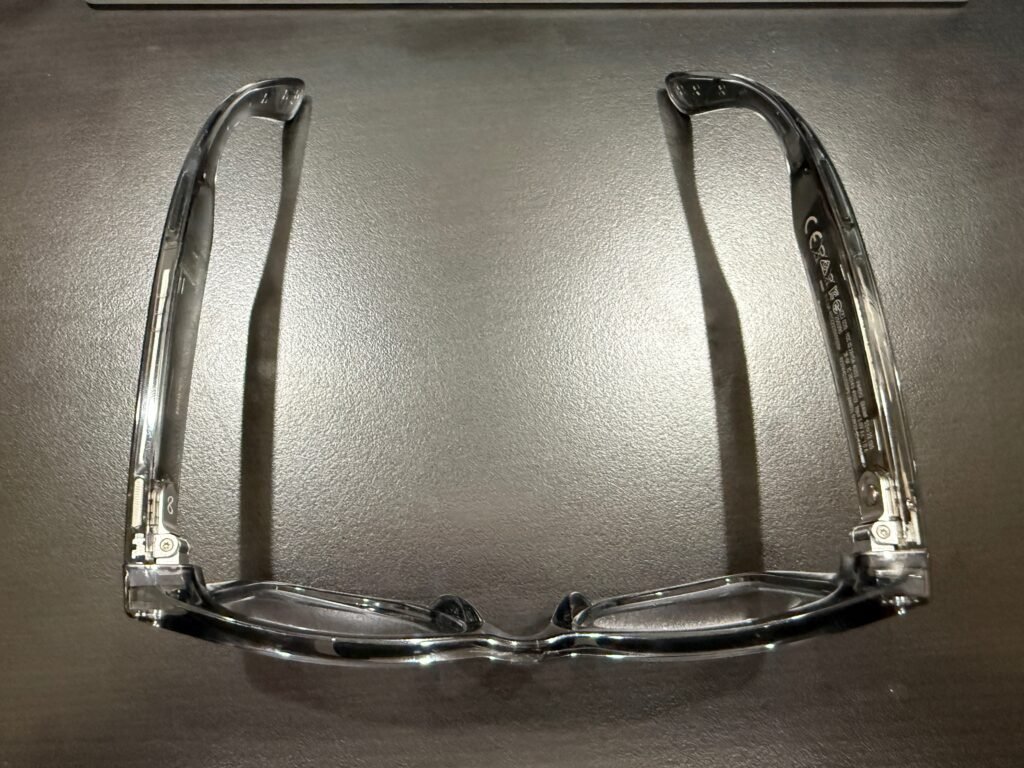
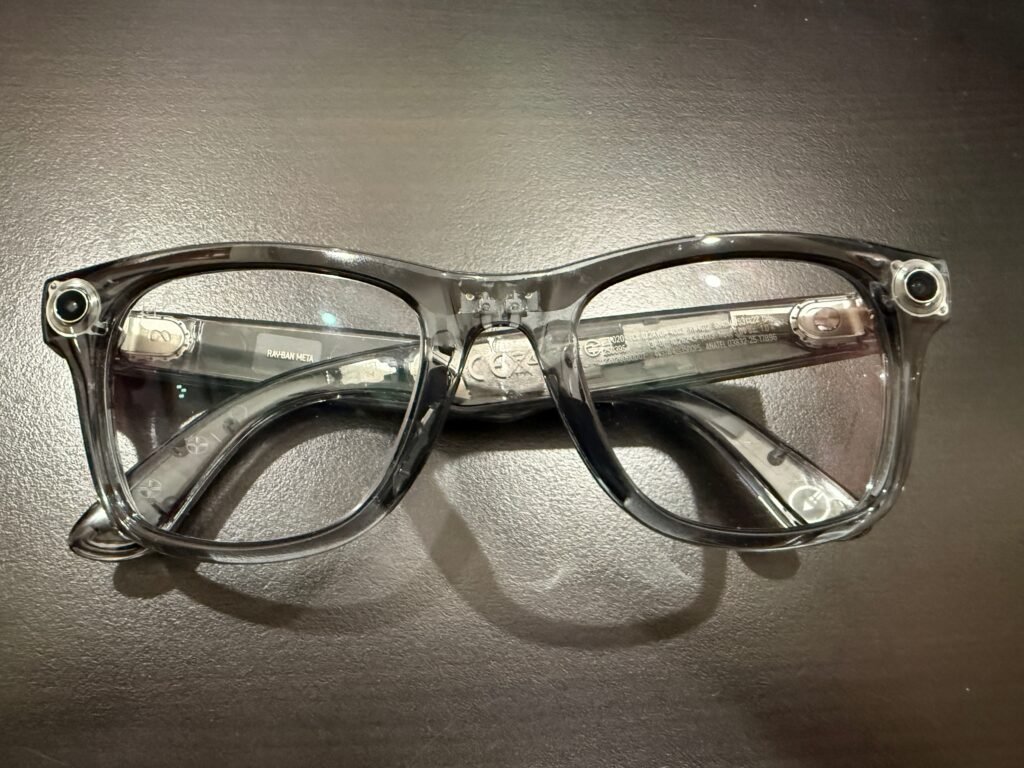
My Ray-Ban Meta Wayfarers Large (Gen 2) on my desk.
The Quick Answer
The Ray-Ban Meta (Gen 2) are smart glasses that look like ordinary Wayfarers but pack a camera, open-ear speakers, microphones, and Meta’s AI assistant. They start at $379 for the standard Wayfarer and climb from there depending on the frame and lenses. They’re easy to set up, the calls and audio are better than I expected, and the camera is a quiet little superpower for capturing real life. The catch is the all-in cost once you need a prescription — which is most of this review, because nobody warned me.
My use case:
Phone Calls — The Surprise Winner
I went in assuming the call quality would be a gimmick. It isn’t. The people on the other end sound clear to me, and more importantly, they say I sound clear to them. Taking a call without digging my phone out of my pocket has quietly become my favorite feature, which is not what I expected to write.
Music and Podcasts Without Earbuds
The open-ear speakers let me listen to music or a podcast while still hearing the world around me — the doorbell, a kid asking a question, traffic. They won’t replace headphones for a flight, and at high volume in a quiet room people near you can hear a faint version of what you’re listening to. But for walking around the house or running errands, it’s useful not to have my ears plugged.
The AI Voice — Yes, I Picked John Cena and the Time is Now
Meta lets you swap the assistant’s voice, including a handful of celebrity options in the U.S. I went with John Cena, mostly because it made me laugh and my kids think it’s the funniest thing I’ve ever done. It’s a small thing, but being able to choose the voice makes the whole device feel a little more personal.
The Camera — For Moments, Not Magazine Covers
This is the feature I bought them for, and it delivers in exactly the way I hoped. By the time I get my phone out, unlocked, into the camera, and aimed, my kids have already moved on to the next thing. With the glasses I press one button and it’s done. The 12MP photos and 3K video are very decent — not professional, and I’m not pretending to be a photographer trying to sell prints. I got these to capture more of our life as it actually happens, and on that count they’ve earned their keep.
If you’re interested in other wearable technology I’ve used extensively, check out my comparison of the Apple Watch Ultra 2, Apple Watch Series 7, and Ultrahuman Ring Air.
The Part Nobody Quotes You: What They Really Cost
Here’s what I wish someone had spelled out for me, and it’s the reason this review exists. The $379 starting price was never going to be my number. Plus, if you are not blind like me, you really could have snagged this for around 350 total.
I bought the Transparent Grey Wayfarer Large, which lists at $459. I caught what I’m fairly sure was a Memorial Day sale that knocked it down to $390.15, and with tax my Ray-Ban total came to $422.34. A while later, an American Express card offer credited me $70 back, so the glasses themselves effectively ran me about $352.
But I wear glasses, not contacts — so a frame with the stock lenses does me no good as an everyday pair. I ordered prescription lenses through Lensology: single-vision Transitions lenses that darken in the sun, in a thinner high-index material with their coating upgrade. That came to $263.20 shipped.
Add it together and my real, all-in cost to wear these as my daily glasses was about $615 after the credit — closer to $685 before it. That’s roughly the price of the glasses all over again. If you wear a prescription, do this math before you fall for the $379 headline.
| Ray-Ban Meta Wayfarer (Gen 2) – Transparent Grey, after holiday sale and tax | $422.34 |
| American Express card credit | -$70.00 |
| Prescription lenses (Lensology – Transitions, high-index) | $263.20 |
| My real all-in cost | $615.54 |
The Other Stuff I Figured Out the Hard Way
Charging Is the Case, Full Stop
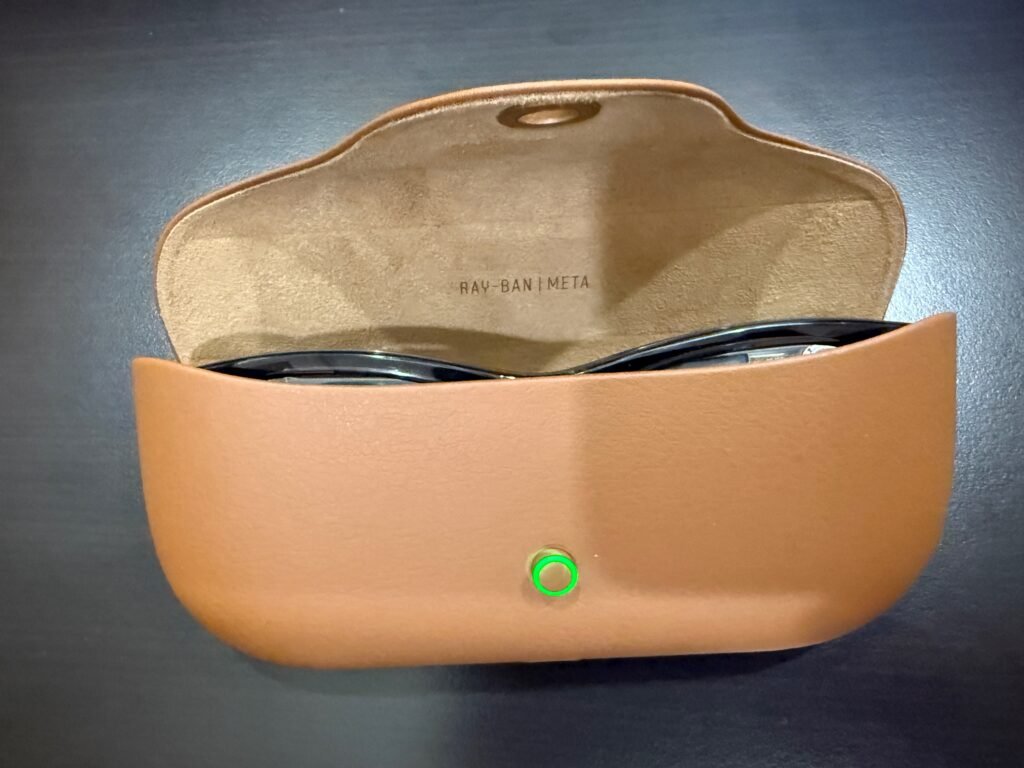
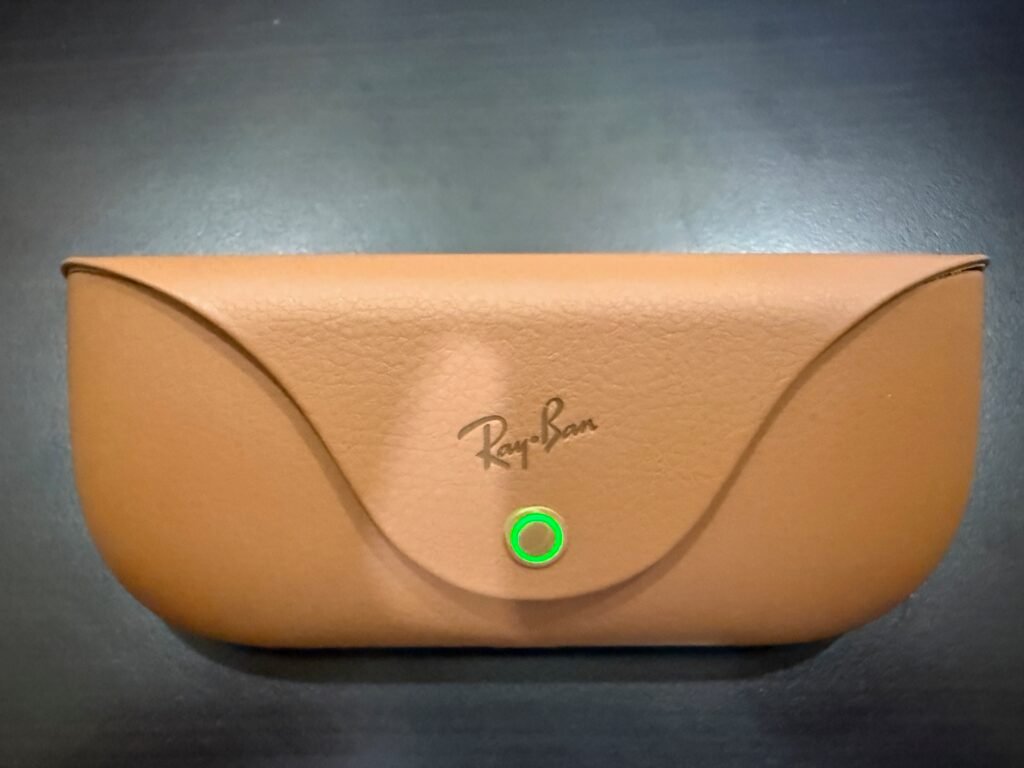
The glasses charge in their folding case, which holds extra juice for topping up on the go. I went down a YouTube rabbit hole and bought one of those aftermarket clip-on chargers — the little adhesive setup that sticks a thin wire along the temple arm so you can charge without the case. I never even installed it. It needs a semi-permanent sticky strip, and I didn’t want to commit to something I’d have to peel off again the moment I wanted to charge normally.
So if you’re picturing a slick always-on charging hack, know that the clean option is the case, and the workarounds ask for more commitment than I was willing to give.
The Privacy Tradeoff — And How I Handle It
These are a Meta product, which means a Meta account, the app, and the usual questions about what gets collected. I didn’t connect them to automatically import every photo into my phone. Instead, I manually download the shots I want, which then drops them into my camera roll and keeps Meta from quietly ingesting my entire library.
It’s one extra step, and I’m fine with it as the cost of keeping a little control. If you never think about this stuff, the automatic setup is more convenient. If you do, the manual route works.
Pros and Cons at a Glance
- Phone call quality surprised me — clear both ways
- Open-ear audio for music and podcasts while staying aware of my surroundings
- One-button camera catches moments my phone always misses
- You can pick the AI voice (mine’s John Cena)
- Easy to use right out of the box
- Battery life comfortably lasts a normal day
- If you wear glasses, the real all-in cost runs $600+ once you add prescription lenses
- Charging means the case; the always-charged aftermarket clips require adhesive installation
- Keeping Meta out of your full photo library means a manual download step
- It’s a Meta ecosystem device with the associated account and privacy tradeoffs
- The camera is designed for life moments, not professional photography
Who Should Buy Them — And Who Should Skip
Buy them if you keep missing real moments because your phone is too slow to pull out, you want hands-free calls and audio without plugging your ears, or you’re curious about smart glasses and want a pair that’s easy from minute one.
Skip them if you need a prescription and that $600+ all-in number gives you pause, you’re uncomfortable managing a Meta account and its data, or you’re expecting a camera that competes with a dedicated one.
The Verdict
I’m happy with them and I do recommend them — with my eyes open about what they actually cost. All-in, with prescription lenses and after a $70 American Express credit, I’m into these for about $615, and most reviews quoting the $379 starting price quietly skip past that.
It’s real money. But as a way to capture more of my actual life and take a call without breaking stride, they’ve slotted into my day better than I expected a face computer to.
Disclosure: This review reflects my personal experience with a Ray-Ban Meta Gen 2 Wayfarer purchased with my own money. I was not compensated by Meta, Ray-Ban, Lensology, or any other company mentioned in this article.