This post contains affiliate links. If you buy through them, I may earn a small commission at no extra cost to you.
Most packing lists are theoretical. Someone imagines a trip, lists forty things you might need, and collects a commission on all of them.
This isn’t that. Our family of four spent two weeks in Japan — Tokyo, Kyoto, and Osaka, averaging seven to eight miles of walking a day. Below is what came with us and actually got used, some of it for years before this trip. At the end: the two things we wished we’d packed and didn’t.
If something isn’t on this list, it’s because we didn’t use it. (The charging setup and travel tech got its own post here.)
What We Packed – The Short Answer
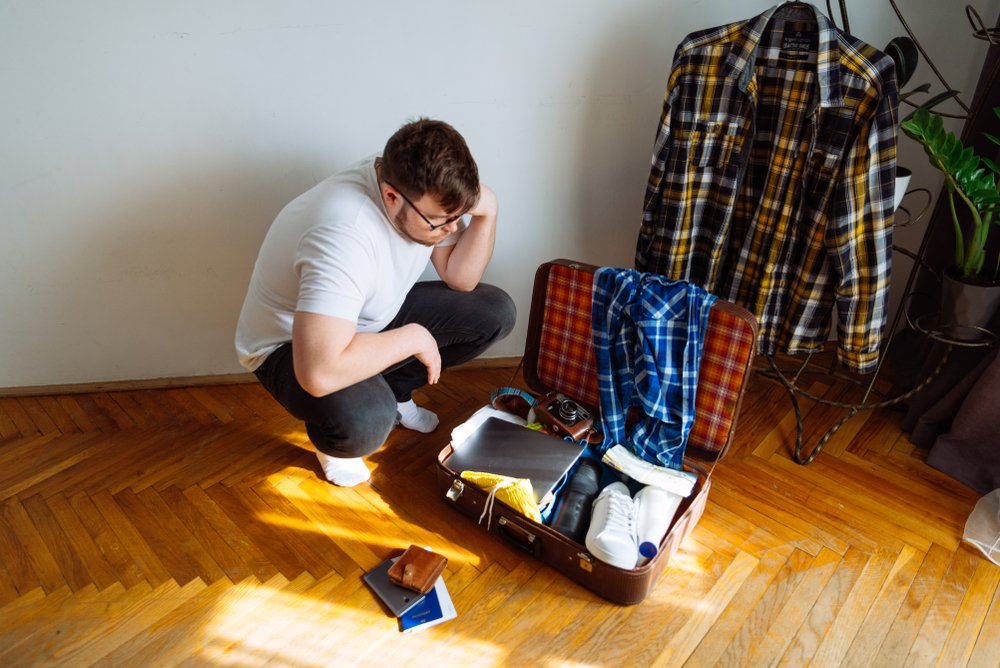
Packing cubes for a three-hotel itinerary, shoes you’ve already broken in, one dedicated place for four passports, and the best trick of the trip: we packed an empty suitcase inside a bigger one on the way there. What we’d change next time is at the bottom, and the second item on that list is the one I’d tell every parent about.
Two Sets of Packing Cubes
We stayed in three different hotels, which means we packed and unpacked three times. Packing cubes turn that from an ordeal into lifting four rectangles out of a suitcase. Assign a color per person, or a cube per category — either system beats digging through a pile.
We’ve used one set for over two years and added a second set in December 2025. Both have held up. This isn’t sophisticated gear; it’s the difference between a suitcase and an organized suitcase, on a trip where you’re living out of it for two weeks. Check price on Amazon | The second set we added
The Wallet I’ve Now Bought Twice
I bought this slim wallet in June 2025. About a year later the outer card sleeve lost its grip and cards started slipping out — so I bought the identical thing again rather than shopping for something else. It’s under ten dollars.
That’s the review, flaw included: the exterior sleeve softens after roughly a year of daily use. At this price I treat that as a consumable rather than a defect. Your call whether that math works for you. It clearly worked for me, twice. Check price on Amazon
Travel Pillows: One Hit, One Miss
You get both results. The pillow I used was serviceable and nothing more — I wouldn’t press it on anyone.
The kids’ pillows were the winner, and they’re the second set we’ve bought them. The first pair didn’t fit them well, which is the whole problem with kids’ travel pillows: an adult-shaped pillow on a child-sized neck does nothing. These fit, they actually used them for the full flight, and they used them again on the way home. That’s the test. The ones the kids liked | The one I used
Neck Fans (July in Japan Is No Joke)
We packed a two-pack of wearable neck fans before the trip — ours came from Sam’s club — and in July they were essential, not a novelty. Japanese summer is heavy, wet heat, and you’re outside walking for hours at a stretch. Look around and you’ll see locals carrying handheld and neck fans everywhere, which should tell you what you need to know.
Ours were a licensed character design, but the generic versions do the same job. Check price on Amazon
Shoes: A Hoka Story That Surprised Me
I want to be careful here, because this is one data point and not a verdict on a brand. I wore Hoka shoes onto the flight. So, technically, there were not packed.
I’ve owned two previous pairs of Hokas, wore both extensively, and found them genuinely comfortable. That’s exactly why I bought the pair I took to Japan. But this particular pair didn’t work for my feet — over seven-to-eight-mile days, they bothered me enough that I sat on the flight home and ordered something else.
What I ordered was the On Cloudmonster 2, and I’m happy with them. They’ve handled long walks well, and I’ve done some running in them with no complaints. That’s my current shoe.
The lesson isn’t “Hoka bad.” It’s that fit is individual and model-specific — a brand that worked for you twice can miss on the third pair, and you find out at mile five in a foreign country. Which leads to the advice that actually matters regardless of brand: break your shoes in thoroughly before you fly. Japan hands you a marathon’s worth of walking across two weeks, and there’s no fixing the wrong shoes once you’re there. The Hokas I wore | The On Cloudmonster 2s I switched to
A Small Bag for Passports
I carried a Black Ember Kompak, and its most valuable function had nothing to do with style: it held our passports. Four passports, one known location, on a trip where you’re pulling them out constantly.
That last part catches people off guard. Japan’s tax-free shopping system requires your physical passport at checkout — not a photo of it — so you’re carrying all four every shopping day. Have one dedicated place for them. Black Ember sells direct rather than through Amazon, so there’s no commission for me here. It’s on the list because it did the job.
The Nesting Suitcase Trick (Free)
My favorite item on this list costs nothing. We flew to Japan with three suitcases — but one of them contained a smaller filled suitcase packed inside it. We came home with four.
With the yen at a 40-year low, you will buy more than you planned: kitchen knives, clothes, electronics, gifts for people back home. Your alternatives are buying a suitcase there at retail prices or paying to ship things home. Nesting one suitcase in another solves the problem before it exists, using space you weren’t going to use anyway.
Check your airline’s baggage allowance for the return leg before you count on it.
What We Wish We’d Brought
Two gaps. The second one matters more than it sounds.
Easy Slip-On Shoes
You take your shoes off more often in Japan than you expect — temples, some restaurants, certain traditional accommodations. Doing that in laced sneakers, repeatedly, while managing two kids and a large belly, gets old fast. A pair of slip-ons I could step out of in two seconds would have saved us real friction. They’re going in the bag next time.
Our Own Kids’ Medicine
This is the one I’d tell every parent. When your kid needs something at 10 p.m. in a foreign country, you don’t want to be standing in a Japanese pharmacy trying to identify a children’s fever reducer from packaging you can’t read. We tried. Google Translate handles words, but it doesn’t tell you which unfamiliar product is the right equivalent, at what dose, for a child.
Bring your own from home in the original packaging: children’s Tylenol or Motrin, a stomach remedy, fiber gummies if your kids use them. These are familiar brands, familiar dosing and requires no translation at the worst possible moment.
One important caveat: Japan restricts or bans some medications that are routine in the US — certain cold and allergy products and some codeine-containing medicines among them — and the rules govern what you carry in, not just what you buy there. Before packing any medication, check the current official Japanese government guidance on bringing medicine into the country. Standard over-the-counter children’s pain relievers are generally fine, but verify rather than assume, and keep everything in its original labeled packaging.
The Bottom Line
The pattern in all of it: the useful items were boring, and most were things we already owned and had already tested: organized packing, broken-in shoes and one place for the passports. The trip-specific wins were the nested suitcases going out and the packing cubes.
Pack what you’ll actually use. Then, go walk eight miles a day and be glad about it.
More from our Japan trip: the tech and charging setup, the QR code that got us through immigration in minutes, how we got around with two kids, and the bathroom that changed my mind.
This post reflects our family’s July 2026 trip. Nothing here is medical advice — consult your pediatrician about medications for your children, and verify current Japanese import rules before traveling with any medicine. Product prices and availability change; check current listings on Amazon.